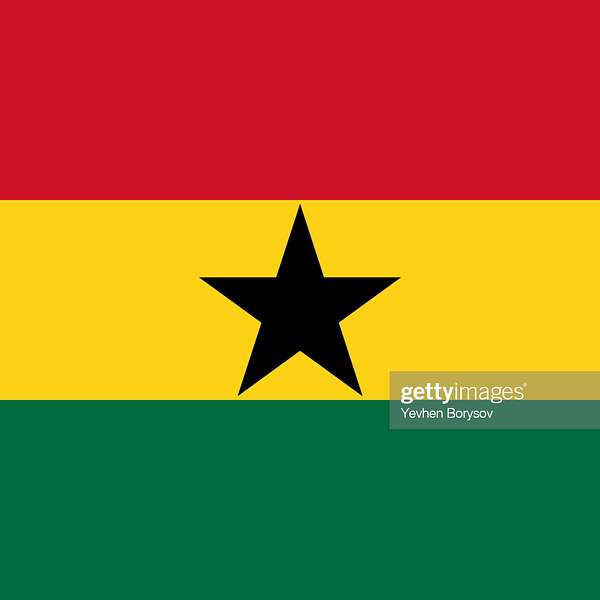
Ghana / Afrika in Focus
Ghana In Focus aims to bring you the lowdown on Ghana including critique on the hot topics making waves in Ghana as well as buying property in Ghana, renting in Ghana especially in the capital, Accra. Also looking at building a property in Ghana and some of the things to look out for such as building materials and environmental factors. We will also be looking at land acquisition in Ghana, giving insight into issues like site plan, indenture, title and land certificate. Ghana In Focus aims to explore the numerous business and investment opportunities that exist in Ghana as well as talking to the movers and shakers in the country. Finally Ghana in Focus talks with Africans from the diaspora who share their experiences of making Ghana their home. Afrika in Focus aims to bring you key stories that are making news on the continent from an Afrikan centered perspective.
Ghana / Afrika in Focus
Ghana in Focus Special: 2025 Year in Review Part I Feat. The Economy, Cost of living, Unemployment and Housing
This week's edition of Ghana in Focus takes a look back at the year 2025 in Review,
We look at some of the key socio-economic indices that have affected the country this year.
The Economy:
John Dramani Mahama was sworn for a second and last term (there is talk of a third term) on 7th January promising key economic improvements like resetting the economy after the previous disastrous 8 years of the NPP, removing nuisance taxes that were a burden on business and the flagship 24 hour policy.
We detail each of the above especially the 24 hour economy which is s good policy on paper but its implementation we detect relies to heavy on so called Foreign Direct Investment (FDI) and NOT investing and/or giving incentives to indigenous Ghanaians owned companies and individuals'.
We warn that FDI results in low wages and Capital flight of profits back to the investor home countries leaving Ghana short changed.
The advise here is for government to leverage on its raw rich mineral resources by getting more royalties and using this as investment seed money for the 24 hour economy. Example is that right now Ghana gets 4% royally rate from Gold production. Given the record prices for gold, this is outrageous. We state the government needs to re negotiate the royalty rate with the gold mining companies just like Burkina Faso, Tanzania, Mali and Botswana (diamonds) have done and get a rate close to 30%.
This increase is what will generate funds that would allow government to invest wholesale in its 24 hour economy ambitions and urge government to resuscitate key Nkrumah era factories like Komenda sugar factory, Jute factory and Bonsa tyre factory, instead of importing sugar, tyres and jute bags.
We end by stating the economy will grow further in 2026 but is caveated by the country leaving the current IMF programme in Spring 2026 ,the need to settle international creditors as well as international events.
The cost of Living:
We explain why the cost of living crisis in Ghana still affects many Ghanaian households' despite improvements in some macro economic indices and explain measures that need to be taken to ease the burden on Ghanaian families, many of whom have seen no increase in their salaries but have had to contend with rapid increases in rent, transportation and food.
Unemployment.
We advise what needs to be done to tackle this canker that threatens the security of the country and warn of the dire consequences if concrete steps are not taken to reduce the estimate 1.3 million classified as unemployed.
Housing:
We provide solution on this most important social economic aspect which is beyond the means of many Ghanaians.
Donate/Support the show: https://www.buzzsprout.com/1793098/support
We offer a consultation session for those who wish to relocate to Ghana , do business in Ghana , buy land, buying a property or even starting business in Ghana. We offer professional support tailored on your needs and wants.
We provide valuable information that can assist you in your relocation like the Ghana card how/where to register your business.
We can also signpost you to other agencies that can help in your relocation as well as business and investment opportunities.
We charge a rate of US$30 for an hour's consultation or US$20 for a 30 minute consultation briefing.
To book your consultation please email ahodwo805@gmail.com
Subscribe on Youtube - just look for the Ghana/Afrika in Focus podcast on Youtube and click the notification bell so that every time I upload a new podcast it automatically comes to your feed.
Tell your family and friends.
Baba, welcome to this week's edition of Ghana in Focus with myself Kwame, uh Ghanaian writer, broadcaster, journalist, historian, podcaster, and entrepreneur. And in this week's edition of Ghanaian Focus is a special, we're doing a review of Ghana 2025 part one, looking at the economy, the cost of living crisis, unemployment, and the opposition MPP. So that's the theme for this week's uh show, Ghanaian Focus Special, review of 2025 part one. Uh, before we do that, just to remind you that if you like what you hear, please share to your friends, uh, family, social media networks. Subscribe to Ghana African Focus on YouTube, subscribe to Ghana African Focus on Spotify, and uh, you know, you want to get as much window as you can, so please uh pass the word on to your friends and family about this fantastic podcast called Ghana in Focus. It doesn't cost anything to subscribe, so like I said on YouTube, look out for Ghana African Focus on YouTube. Hit that notification bell, meaning that every time we upload a new podcast, YouTube notifies you of it. Similarly again with Spotify, look out for Ghana, African Focus on Spotify. Hit the follow button, meaning that every time we download a new podcast, Spotify will remind you. On all of that, like I said last week, you know, we've had some great feedback from Spotify over the last 12 months, and we're gonna tell you just before we start the show, tell you uh some facts and figures about my Spotify listeners. So I believe that the bulk of my listeners uh on on Spotify. Okay, and so we're just gonna give you some figures uh concerning Spotify. So, firstly, the total audience uh increased this year by 43 percent. That's massive growth. So, thank you very much for for you listening on Spotify up 43% from my audience last year. Now, again, total new audience. So, this is people that tuned in for the first time, increased by whopping 99% from last year. Fantastic. My followers increased by 24% from last year, so that's an encouraging sign. So, please, like I said, uh keep following me on Spotify and sign up to Ghana African Focus on Spotify. So, again, you know, the total followers increased by 24% on last year's figures, and my increase in total listen. So that's the total listen time from last year increased by 17%. So now we're bringing some more uh stats. So there was one episode that got everyone talking this year, and that episode was not surprisingly why the white man wants to kill Ibn Chouraway. That was the most popular um podcast that we uploaded this year on Spotify. Why African Fook is special, why the white man wants to kill Ibn Churry. Okay, now this particular podcast was uh well apparently was played 300% more than the other podcasts that I've done throughout the year. So that shows about those kind of a podcast that you like, those kind of um introspective, you know, deep analysis that you like. So thank you to all of you who made that particular podcast, Why the White Man Wants to Kill Ibn Choey, a great success and went viral on Spotify. So moving on then. Uh so across Spotify network, we were listened, we were downloaded in more than 50 countries. Yep. And my top five countries were five, the fifth place was Colombia, the fourth most listen to the country was Germany, the third most incident country was Ghana, second most listening to was the United Kingdom, and the top country which my podcast listeners were tuning to was from the United States of America. So again, thank you to all these countries who downloaded a edition of Ghana African Focus. Thank you for that, and thank you to especially to listeners in the United States, the UK, Ghana, Germany, and Colombia. Alright, so moving on with some more uh figures from Spotify. So um, in terms of top fans, um apparently on Spotify, uh Ghana African Focus is a top 10 show for 114 of you, which is interesting. I'm a top five show for 79 of you, and I'm a top show, the number one show for 24 fans, which is quite interesting. So finally, on this um you know uh Spotify end of your review so they're saying according to Spotify that 2025 you know one of you know Garden African Focus was was on the talked about uh podcast. Apparently, uh I received more comments than 89% of other shows on Spotify, which is quite staggering. So that wraps up the Spotify uh stats for this year. Again, thank you very much to all of you who listen on Spotify, who downloaded on Spotify, who made comments and who made the show such a great success on Spotify. We look forward to you know you continuing to listen to Ghana African Focus in 2026. All right, so uh let's get into a podcast looking at year in review in Ghana for this year 2025, looking at the economy, the cost of living, unemployment, and the opposition new Patrick Party. So, you know, Ghana went to polls a year ago and they voted overwhelmingly for the NDC, John Giamatti Mahama, and John Gemani Mahama was sworn in again for a second term on January 7th, 2025. So bringing back the NDC to back to power on a platform of resetting the economy for the garden that we want, with basically his 24 hour economy, a central theme of uh that administration. And so, you know, we're looking about the economy. So, you know, the NDC and Bahama inherited a basically economy that was online support machine. You know, we were all aware that during the latter stages of the NPP, uh last MPP government, inflation peaked at 54%, went down to about 25%. Interest rates were stumbling high in the 30s, and you know, it made you know uh the cost of living, uh, the economy was that bad that many people left Ghana, and also many businesses closed you know their businesses in Ghana, moved out of Ghana, and also that compounded the economy in terms of you know the the debt dis uh sorry, their the debt domestic debt program that I'll talk about next week, and also you know, even people's pensions were you know uh stolen, to be quite frank, stolen, and they were used to um pay back, you know, loans that the government had not been able to pay back. So the economy was in such a bad shape when the NDC came to power on January 7, 2025. So let's look at some stats in terms of the economy. So, you know, like I mentioned, the NDC inherited interest rates at 25%. They've since gone down to 18%, which is much better than what it is. Although uh the banks in Ghana haven't really passed on these low interest rates or the Bank of Ghana's policy rate to the customers or to the consumers. And so, compared to the rest of Africa, Ghana still has high interest rates, which makes the cost of borrowing for businesses quite expensive as compared to other African countries, particularly in the sub-region. Now, again, if you are someone who wants to do business in Ghana, you must bear that in mind that the cost of doing business in Ghana is very expensive compared to other African countries in the West Africa sub-region. Again, but it's on down trajectory, so that's positive. Again, we look at you know inflation. Inflation began the year in the high 20s. As of this, as of as of last month, November, we haven't got December's out yet, but as of I believe no, no, December, you've had December's policy um figure for inflation. So December, as of December, inflation in Ghana now stands at six percent, down from a whopping 25-26% in January. So it shows you that the NDC uh agenda of economic reset has paid dividends, and also the 2025 budget and mid-year review have both have its theme reset, restructure, and rebuild after the disastrous 22-23 uh crisis, which you know resulted in you know a massive deviation of the city and also peaking those interest rates at 54 percent. So, you know, uh, even though the economy has seen some stabilization, you know, growth uh has already surpassed the government's uh target. So, you know, the mid-year data that we have shows that Ghana's economic growth for 2025 already surpassed the government's four-year target, indicating a sharper rebound than expected, and outpacing some regional peers. Again, we talked about inflation, but sorry, we talked about interest rates. So the policy rates and T-bill rates, which is treasury bill rates, are high uh compared to um West African countries, but are downward trajectory, but facing the downward trajectory, reflecting a cautious move away from crisis-level monetary tightening uh tightening while trying not to reignite inflation. So the city, which was a big, big issue, particularly in 22-23, has shown relative stability this year, and they started the year at 15 cities to a dollar. As of this podcast talking to you right now, the city is now at 11.5 to a dollar. So this year, in actual fact, the city this year has gained 25% of its value of the American dollar. So the economic management and fiscal discipline in which the NDC has operated this year, has benefited when we see the city performing well, in which it's appreciated by 25% against the US dollar alone. And it's also appreciated against the pound sterling and also the euro as well. So that tells you that in terms of the stable currency, which is very, very important for those of you who want to do business in Ghana or you know, even living Ghana, they to say cost, having a stable currency, it makes you know uh living more bearable. Yeah, I'm not saying it's um you know all glitter and gold, but it's much, much more uh having a stable currency as we've had this year in Ghana has made living more bearable than what it was 2022-23 and any part of last year. However, yeah, despite the good news about the stabilization of the city, a modest reband of the economy, low inflation rates and low inflation, prices are still high, yeah. And we'll tell you why, you know, prices are still high. Yeah, so even though, like I said, inflation is down in Ghana, the cost of goods and services in Ghana are still high. Let me tell you why, despite the macroeconomic figures and also the stabilization of the currency, why the price of goods and services and also particular food inflation is still high in Ghana. So many businesses in Ghana adjusted their prices upward during the crisis of 2023. Yeah, so when the city was about 15 to a dollar, when interests were 35 percent, when inflation was 54 percent, many businesses adjusted the prices upwards. Yeah, so during this high inflation period, importers price goods using worst-case exchange rate assumptions. Yeah, shops increase prices to protect their margins of business, transport, utilities, and logistics cost or rows. Yeah, now that's since come down, particularly with the fuel on the on the world market, has gone down to something in the region about 60, 68, 70 dollars, yeah. But like I said, a lot of businesses did not price for now, they priced for when the city was a 15 to a dollar, yeah. So because inflation is falling, businesses are not rushing to reduce their prices. Why? Because they want to recover losses from the previous years, they also expect future insidity in case the city goes back up again, or rather, appreciates against the dollar. So it's appreciated rather than some against the dollar, but businesses may worry if it depreciates again, yeah. And Ghana's market is not good is not that competitive, so prices are sticky, so it doesn't allow for particularly the the smaller boys. I mean, the big boys have got bigger, you know, um more deeper pockets and can can can you know carry some of the cost to themselves, they are able to reduce prices, but not that much. But most businesses in Ghana, because the market is not highly competitive, they have to keep the prices relatively high. So, another reason why the cost and goods and services are still high in Ghana, despite the macroeconomic figures, is because even though the city are stabilized, import costs remain high. Yeah, so many goods that were imported are older, like I said, older exchange rates, yeah. And also global shipping costs remain high. So during the pandemic, yeah, that made shipping costs very, very high. Yeah, and also these costs were put on to businesses and they put that onto the customers, yeah. So global shipping costs are still high, haven't gone down since COVID. Again, import duties in Ghana, and this is a big one while the cost of goods and services in Ghana are high. Import duties at the port charts are still very, very high. Yeah, and because Ghana imports everything from fuel to food to spare parts to medicine to electronics, yeah, because of this, their cost structure remains expensive. Yeah. So this is why it compounds the need for businesses to put in their prices so they can offset some of the some of those costs that they incur, i.e., the port and the duties with higher costs, with higher prices. And again, interest rates are still high in Ghanaian in African terms, which is affecting uh businesses' ability to affect their costs. So even though the possibility is now 80%, commercial lending rates in Ghana are still high. So banks' lending rates often exceed 30%. Yeah, and there's been you know a uh you know a cry from the AGI, which is this is the situation of Ghanaian industries, for the banks, commercial banks in Ghana to lower interest rates. Because if it does, that will help businesses, you know, uh access to finance. And if it is in Ghana, one thing about Ghana you must know that access to finance is a big deal, is a huge problem for many SMEs in Ghana. Yeah, so when businesses borrow at high rates, they pass they're naturally pass the cost to the consumers, hence why the cost of goodness services is high. And lastly, the taxes, levies and fees are rising. So Ghana's fiscal situation is tight. So government will buy savings on VAT, levies on fuel, import duties, and free and fees and charge at the ports. So these taxes directly increase prices. Yep. So these nuisance taxes, which were you know annoyed at the early early of the year, the e-levy taxes, the emissions taxes, the betting taxes, and other taxes, which were troublesome using taxes earlier on the year, have been removed by the government in their budget recently. However, you won't see the full effect until January next year. So hopefully, you know, throughout next year, when these taxes kick in, these tax, these lower taxes start kicking in. Hopefully, the cost of goods and services in Ghana will begin to go down. Okay, so because of all these things I just said, yeah, and added to that, there's still Issues within the Ghanaian economy, which makes prices high. Yeah, so for example, low production. Like I said, Ghana imports key commodities like rice, sugar, oil, poultry, spare parts, pharmaceuticals, etc. Right, these things equal price vulnerability. There's also weak supply chains in Ghana, poor storage, transportation inefficiencies, and also middlemen, you know, at the ports are layers of cost. And also energy costs in Ghana are quite high. So electricity costs and also fuel costs are high. Yeah. And also, like I mentioned, the electricity company of Ghana has got huge debt. And unfortunately, how they're going to recoup that debt, yeah, is by you know uh increasing the cost of electricity utilities. So again, now the burden of businesses, and also they're passing on this cost to consumers. And so, despite the positive outlook in 2025 and for 2026, yeah, prices are high in Ghana, and this is compelled the cost of living price in Ghana. So during you know, COVID and the back end of the COVID, right, that that saw uh inflation peak at 54%. That precipitated a rapid price, a cost of living price in Ghana. Added to this is that Ghanaian wages have not really risen in line with the inflation. Yeah, so many, many older Ghanaians are not seeing an increase in their salaries. However, rent, food, transport, and utilities have tripled since COVID. Businesses are more cautious, and this has compelled a cost of living crisis in Ghana that has not that has not gone down. It is still there. Yeah, and so we hope that next year, you know, when these taxes start to kick in, in terms of you know, you know, the removal of um the e-levy tax, the removal of the um COVID-11 tax, the removal of the emissions taxes, we hope that will have some effect on the on the economy, but more particularly the cost of living crisis that Ghanaians are facing right now. Food is not expensive in Ghana. Food inflation is higher than normal inflation. So, like I said, normal inflation in Ghana is 6% out of December. But food inflation in Ghana is triple that, yeah, 80%. And it's mostly because Ghana imports too much food. Rice, you know, cooking oils, you know, cassava, yams that we should be growing ourselves. And I'll talk about that in ethnic agriculture, you know, tomatoes, Ghana virtually imports everything needs to eat. So this is why, added to the fuel costs, food inflation is high in Ghana. And so, you know, the cost of living remains an issue for many Ghanaians, despite you know, certain premises in the economy. But on that, you know, many Ghanaians are saying that if we can't fit in our pockets, yeah, then for them, you know, the economy hasn't really improved. So I understand where they're coming from because yes, macro level, the economy is beginning to rebound from the mess that Mohammed and then you see inheritance is becoming to come down. However, you know, that change is not yet affected in the box of the older Ghanaian. Yeah, and so the change that they voted for in massive numbers last year has not yet materialized as far as many Ghanaians are concerned, and um, you know, the cost of living is still high in Ghana. But hopefully, like I say, from next year onwards, when these um other taxes start to kick in, the you know, the removal of the taxes kick in, it's hopefully, and the import duties as well. Hopefully, you know, things will get better for the older Ghanaian, you know, throughout 2026. And so that's the economy and the cost of living uh done. We look at unemployment now. Unemployment is a massive, massive issue in Ghana, and some communities have stated that this is a ticking time bomb, and we already see some of the consequences of this high unemployment. Unemployment right now in Ghana, yeah, is 30% across the board. And for youth, under 30, yeah, and many and Ghana is a very young population. I think the arbitration in Ghana is about 20, yeah. But you know, youth unemployment is somewhere between 40 and 50 percent. Yeah, so this is very, very disturbing for a country that wants to, you know, industrialize and develop when you've got high youth unemployment. Yeah. And so Miami's 24 economy has to work, yeah. And the only reason why, the only way it can work is not because of private foreign so-called direct investment, because for me, that's a red herring. This drive for so-called foreign direct investment, right, is another form of slavery because these companies come in with the so-called capital, yeah, but they pay meager wages, yeah, and also the profits that they make goes out of Ghana, called capital flight. So if Mohammed wants to A, and then you see if they want to reduce um the massive youth unemployment, yeah, and also if they want to ensure that Ghana's economy remains on track, then they've got to really, you know, for me, what they've got to do is to reopen some of those factories that got shot by you know, rural, you know, those increments, increments industries that were shut down primarily by rural and cofort. So, for example, Ghana imports too much sugar. What you can do, Mahama, NDC, reopen commended sugar factory in the in the commended area of Ghana in the central region. Right, and you can use the money, and this is and again coming on to you know parts of the economy, we don't get much for gold. Even though Ghana right now, gold is at record prices, it peaked at$4,500 an ounce. I think middle of the year, it's now back down to$3,700,$3,700 an ounce, which is still higher than the average of about$3,200 for most of last year, 2024. So right now, Ghana gets just 4% royalty from gold. That's not that's not enough for you know development and interestation, which is why Ghana always has to go to the international markets to borrow money. Now, for me, if Ghana got at least 30% royalty weight from gold, yeah, and Ghana mines more than 5 million ounces of gold every year, you times that by three, you know, average of about$3,500 an ounce. You do the math. And you see how you see how much money Ghana can make if Ghana increases the royalty weight from 4% to 30%. And some of that money that we get from the royalty weight can be used to open commander sugar factory so that we grow our own sugar rather than import it. Another factory that could be opened is the Thai factory at Bonsa in the Western region. For those of you who are not aware, under Nkuma, Ghana had a Thai factory in the Western region. Yeah, because the Western region, particularly place called Bonsa, is endowed with rural plantation. So in Kuma Nundu, this is why he purposely strategically built the Thai factory of Bonsa in the Western region. So rather than importing ties, giving other people a job, we can create our own employment, our own jobs by a cultivating rural plantation in the Bonsa area of the Western region, cultivate that rubber, cultivate that rubber into tyres. Again, creating more employment for our youth. And and those tyres could be bought by Ghanaians themselves. Also, some of those ties could be exported to other West African countries because the tyres that we make in Ghana will be for the West African condition, the heat, the intense heat, and also the rainy season. Rather than importing tires from Europe, that are from the European that is for European climate. Yeah? And you wonder why our ties in Ghana don't last long. Because we're importing tires that are for European conditions, not a Ghanaian or African condition. So that's two ways, like I said. If Mohammed series about a 24-hour economy and say it's about wanting to uh you know curtail this youth on the point of time bomb, these are two examples I've given him that he can do. Reopen strategically some of the crime and criminals, old industries that were shut down by ruralism bike with reopen them with money from royalty, more royalty rates, and that could be used to industrialize Ghana and reduce this massive, massive unemployment problem that we see in Ghana. Every year in Ghana, more than a quarter of a million people leave our universities, technical college, and college of higher education and then earn job for them. Muhammad NDC, you got you got the plan. In common coming off of you a template, seven-year development plan, take out the best from it and then tweak it and manipulate it for 2026 and improve it. Yeah, because if you don't, yeah, this unemployment ticking time bomb can have major consequences, and we see it already, particularly with increase 419, you know, in in in internet crime. Just recently, a Ghanaian was just extracted from sorry, a Ghanaian has extracted this from to America because he duped many white American women into love relationships that that did not you know material life, and he caught many white American women of eight million dollars. Yeah, and has now been caught, sent back to America for trial because of this, and that's then because of no jobs in Ghana. Also, prostitution among our women is high, particularly in Accra, everywhere in Accra, Caprice, Usu, Laborney, Is Lagon, you know, the poor areas of Accra, rich areas of Accra, young girls are prostituted themselves. Why? Because there's no job, or there's not a job that pays well. Yeah, because many guys, like I said before, Ghanaians haven't seen an increase in their pay for years. Just the other day, you know, um, some Ghanaian working in the public sector got a 90% pay rise. Yeah, 90%. Yeah. When you look at the cost of living in Ghana, which has doubled, yeah, and like I said, prices remain high. That's hardly enough, particularly for a man who's got a family to look after. So this is why many young girls who are unemployed are doing this position because there's no jobs out there. So this is the consequences of this youth unemployment, you know, and also the increase, and also the rising crime. Armed robbery in Ghana is becoming now an everyday occurrence, yeah. And if you come to Ghana, you need to be aware of armed robbery. Because armed robbery happened in Ghana on a daily basis, and you as a diasporaan, yeah, you be a big target. Yeah. So youth unemployment cannot be emphasized enough. The government must take 2026 as a year to tackle youth unemployment. Because if it doesn't, as we've seen already, you know, the consequences could derail you know any economic uh macroeconomic figures the government may want to tackle with. And last issue for now is housing. So, as I mentioned in my budget analysis, you know, one of the biggest, the biggest emission from the budget was any salient housing policy to build affordable houses for Ghanaians. Right now, as I mentioned, there's a housing crisis in Ghana. All the housing being built in Ghana is located for 95% of Ghanaians. So all these luxury pumps you see in Laborni, Islagan, Cantments, Airport Residential Area, are luxury and high-end. And they're telling made for uh so-called expatriates, uh diaspora from the uh African diaspora, and also investors who may see uh these high-end units as a uh as a as an investment opportunity. However, the reality is because these apartments are very, very expensive, particularly to rent, many of these new apartments are empty. You go to airport residential area, East Lagon, Cantonments, Laboni, Airport Hills, these plus areas, ridge, many of these trendy, luxury apartments are empty. Why? Because no one can afford to live in them. But we know people are using drug money, and also women that they've uh you know attained in a very, very devious way to wash it away in the real estate industry. So, you know, for me, you know, this housing crisis is serious because Accra is getting getting too overpopulated and there's not a proper structure in place, yeah, in terms of planning, people are just building hap-hazardly, and that's causing you know a lot of congestion within the outer skirts of Accra. And so the government should have uh implemented a policy whereby it will use money again from the revenue, from gold, diamonds, and the new one-on-the-block, lithium. Lithium prices are low right now, but going forward, because if it's using electric cars, what have you, lithium is a source of the commodity, and so the price will go back up. And so we we've got to extrapolate you know value for money from our resources, yeah, so that we can use that money to build housing projects, just like in Kuma built a Tama, just like a champagne built at the time West Africa's largest estate down some mine, the same way that Mahama and then you see can next use the next three years to use revenue from gold, from oil, from lithium, from diamonds to build sustainable, affordable housing for many Ghanaians. Because right now, many Ghanaians are struggling even to pay rent, and rents have doubled in in you know a crowd alone in the last two years since COVID. Doubled, in case it tripled, yeah. And because the the rent laws in Ghana did not work, lands are charging sometimes up to three years advance, and that's hampering many Ghanaians. So, you know, housing is a massive problem in Ghana, housing is at a cross level in Ghana, and there's a housing sort of in Ghana, particularly where the old where the massive Ghanaians are concerned. And so we hope that next year and the next few years to come, you know, government initiates and implements an affordable housing policy scheme whereby the order Ghanaian can afford to buy a house and later, you know, you know, rent a house and then later buy a house as some kind of you know buy-to-rent scheme or rent-to-buy scheme, just like Magafachia had did in the UK in the 80s. Yep, because housing is a very, very important commodity uh for uh industrial development and industrial growth. If people haven't got housing, you know, it does you know uh present social issues for the country. So you know, it's very, very important that the government, you know, in 2026 and beyond has a sustainable, eco-friendly, affordable housing policy. I didn't mention opposition. I don't think we've got time to mention the opposition, so we'll leave it here for now. Uh, this has been uh review of Garan 25 looking at the economy, the cost of living, unemployment, and housing. Yeah, in part two, we're gonna look at Gar MC, it is good small-scale mining. We'll be looking about health, agriculture, and also the opposition new patriot party, what they've done in 2025, and what they have to do in the fall in the year to come. So, this has been uh Ghana Focus Special Year in Review 2025 part one. If you like what you're here, please share to your friends, uh family, social media networks, subscribe to Ghana African Focus on YouTube, subscribe to Ghana African Focus on Spotify, and don't forget to hit the notification button, meaning that every time we upload a new podcast, uh Spotify or uh YouTube will notify you of that. Alright, okay, so for myself Kwamey and from all the crew here on Ghana Focus is thank you very much for listening, and we'll see you next week for part two of Year Review 2025.